
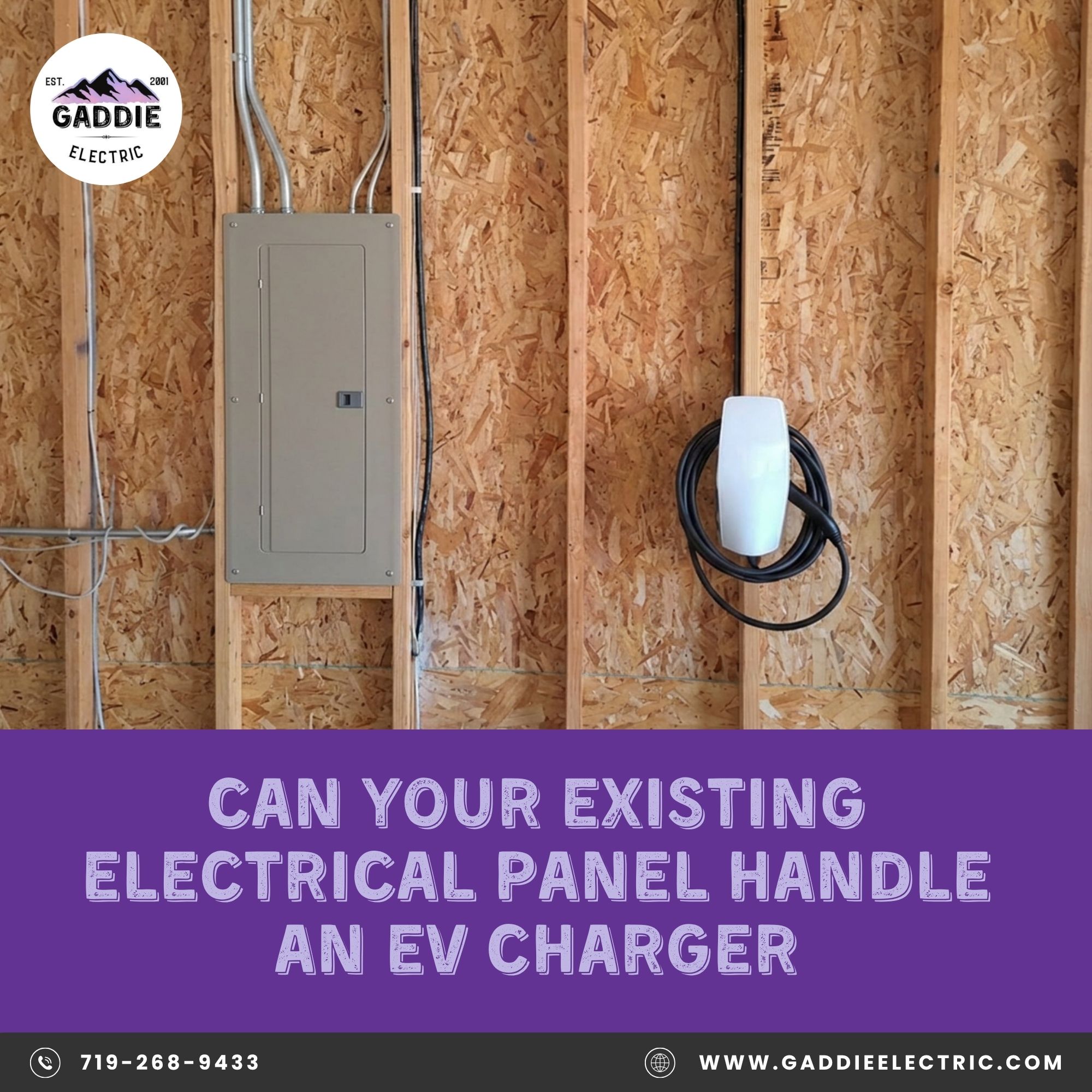
Can Your Electrical Panel Handle an EV Charger?
As electric vehicles become more common throughout Colorado Springs and across the country, more homeowners are considering installing a home EV charger for faster and more convenient charging.
One of the most common questions homeowners ask before EV charger installation is:
“Can my existing electrical panel handle an EV charger?”
The answer depends on several factors, including the size of the electrical service, available breaker space, the age and condition of the panel, and the overall electrical demand within the home.
In some homes, installing an EV charger is relatively straightforward. In others, additional electrical work may be needed before the charger can be installed safely and in compliance with electrical code requirements.
Fortunately, a full electrical panel upgrade is not always the only solution.
At Gaddie Electric, we help homeowners throughout Colorado Springs and surrounding communities evaluate their electrical systems and determine the safest and most practical option for EV charger installation.
Why EV Chargers Require Electrical Evaluation
Unlike many standard household appliances, Level 2 EV chargers can place a significant continuous electrical demand on a home’s electrical system.
While a Level 1 charger may simply plug into a standard 120-volt outlet, a Level 2 EV charger typically requires:
- a dedicated 240-volt circuit
- higher amperage
- a dedicated breaker
- sufficient electrical panel capacity
Because EV chargers can operate for several hours continuously while charging a vehicle, electricians must carefully evaluate whether the existing electrical system can safely support the additional load.
This is especially important in older homes or homes that already have high electrical usage.
Level 1 vs Level 2 EV Chargers
Understanding the difference between Level 1 and Level 2 charging is important when determining whether your electrical panel can support a home EV charger.
Level 1 EV Chargers
Level 1 chargers typically:
- plug into a standard 120-volt outlet
- charge more slowly
- require less electrical demand
- usually do not require special installation
Although convenient, Level 1 charging may take significantly longer to fully charge an electric vehicle.
Level 2 EV Chargers
Level 2 EV chargers:
- use a 240-volt circuit
- charge vehicles much faster
- often require professional EV charger installation
- create substantially higher electrical demand
Because of the increased power requirements, Level 2 EV charger installation often requires an electrician to evaluate:
- panel capacity
- breaker space
- service size
- load calculations
- electrical code compliance
Does Your Electrical Panel Have Enough Physical Space?
One of the first things an EV charger electrician checks during an EV charger installation is whether the electrical panel has enough physical breaker space available.
Even if the electrical service has enough overall capacity, there still needs to be room inside the panel for the additional breaker required for the EV charging circuit.
In some situations:
- tandem breakers may be an option if the panel is designed for them
- a sub panel may be installed
- breaker reconfiguration may create additional space
However, not every panel is designed to safely support these modifications.
The manufacturer, model, age, and condition of the panel all play important roles in determining what options are available.
Does Your Home Have Enough Electrical Capacity?
Available breaker space is only part of the equation.
Your home’s electrical service must also have enough available electrical capacity to safely support the EV charger without overloading the system.
Many modern homes already have significant electrical demands from:
- air conditioning systems
- electric water heaters
- electric ranges
- hot tubs
- workshops
- finished basements
- multiple refrigerators or freezers
- home offices
- electric dryers
Adding a Level 2 EV charger increases the total electrical demand even further.
As a result, electricians often perform load calculations to determine whether the home can safely support additional EV charging equipment.
What Is a Load Calculation?
A load calculation helps electricians evaluate how much electrical demand already exists within the home and whether sufficient unused capacity remains for a home EV charger.
During this process, electricians review:
- the size of the electrical service
- existing appliances
- HVAC systems
- lighting loads
- dedicated circuits
- continuous electrical demand
- future expansion needs
This evaluation helps determine whether:
- the existing panel can support the EV charger
- a sub panel may help
- an EV load management system is appropriate
- a full electrical panel upgrade is necessary
Load calculations are especially important in older homes throughout Colorado Springs, Monument, Falcon, and surrounding areas where electrical systems may not have originally been designed for modern electrical demands.
Sometimes an Electrical Panel Upgrade Is Necessary
In some homes, the existing electrical service simply is not large enough to safely support EV charger installation.
When that happens, an electrical panel upgrade may be recommended.
However, many homeowners are surprised to learn that a full 200 amp service upgrade is not always required.
Depending on the home and the electrical system, electricians may be able to recommend alternative solutions that avoid a larger upgrade.
Older electrical panels can also create additional concerns during EV charger installation.
Certain outdated panels — including Federal Pacific panels — may:
- present safety concerns
- have limited compatibility with modern breakers
- make sourcing replacement parts difficult
- create code compliance issues
In some situations, panel replacement may still be the safest and most practical option before installing an EV charger.
What Is an EV Load Management System?
An EV load management system — sometimes called an EV energy management system or “black box” — can sometimes allow homeowners to install an EV charger without upgrading the entire electrical service.
These systems monitor the home’s electrical usage and automatically help manage electrical demand to avoid overloading the service.
As a result, some homeowners may be able to:
- avoid a major service upgrade
- reduce installation costs
- safely add EV charging equipment to existing electrical systems
This can be particularly helpful in homes where the electrical service is close to capacity but still has manageable usage patterns.
When Is a Sub Panel an Option?
In some cases, a sub panel may be an effective solution for EV charger installation.
A sub panel can:
- provide additional breaker space
- help organize circuits
- support future electrical expansion
However, a sub panel does not increase the overall electrical capacity of the home.
The main electrical service must still have enough available amperage to safely support the additional EV charging load.
This is why a professional evaluation from a licensed EV charger electrician is important before beginning installation.
Permits and Inspections May Be Required
Depending on the installation, permits and inspections may also be required for EV charger installation in Colorado Springs and surrounding communities.
Permits help ensure:
- electrical code compliance
- safe installation practices
- proper circuit sizing
- correct breaker installation
- grounding and bonding requirements
- safe long-term operation
Every home and municipality can have different permitting requirements depending on the electrical work being performed.
Why Professional EV Charger Installation Matters
EV charger installation involves more than simply adding a new outlet.
Improper installation can create:
- overloaded circuits
- overheating
- nuisance breaker trips
- damaged electrical equipment
- fire hazards
- code violations
A licensed EV charger electrician helps ensure the electrical system is evaluated properly and that the EV charging equipment is installed safely for long-term use.
At Gaddie Electric, we help homeowners throughout the Colorado Springs area evaluate their electrical systems, determine available options, and install EV chargers safely and professionally.
Every Home Is Different
There is no universal answer when it comes to EV charger installation because every home’s electrical system is unique.
Factors that affect EV charger installation include:
- panel manufacturer
- panel condition
- available breaker space
- electrical service size
- existing household electrical demand
- charging speed requirements
- future electrical needs
Some homes already have enough capacity for a home EV charger, while others may need:
- a sub panel
- load management system
- breaker reconfiguration
- electrical panel upgrade
A professional evaluation helps determine the safest and most cost-effective solution.
Thinking About Installing an EV Charger?
If you are considering EV charger installation in Colorado Springs, Monument, Falcon, Fountain, or surrounding El Paso County communities, Gaddie Electric can help.
We evaluate:
- electrical panel capacity
- breaker space
- electrical demand
- EV load management options
- panel upgrade requirements
- code compliance considerations
Whether your home needs a simple EV charger installation or a more complex electrical panel upgrade, our team can help you determine the safest and most practical option for long-term EV charging.
Contact Gaddie Electric today to schedule an EV charger evaluation or request a quote.
Frequently Asked Questions About EV Charger Installation
Can my electrical panel handle an EV charger?
Possibly. The answer depends on the size of your electrical service, available breaker space, and your home’s overall electrical demand. A licensed EV charger electrician can perform load calculations to determine whether your system can safely support an EV charger.
Do I need a 200 amp panel for an EV charger?
Not always. Some homes can safely support EV charger installation without a full 200 amp service upgrade. In some cases, a load management system, sub panel, or breaker reconfiguration may provide an alternative solution.
What is a Level 2 EV charger?
A Level 2 EV charger uses a 240-volt circuit to charge electric vehicles much faster than a standard Level 1 charger. Most home EV charger installations involve Level 2 charging equipment.
Can an older electrical panel support EV charging?
Some older electrical panels may support EV charger installation, while others may require upgrades or replacement depending on the panel type, condition, and available capacity.
What is an EV load management system?
An EV load management system monitors household electrical usage and helps prevent the electrical service from becoming overloaded while charging an electric vehicle.
Do EV chargers require permits?
In many cases, yes. Permit requirements vary depending on the installation and local jurisdiction. Permits and inspections help ensure the installation meets electrical code requirements and safety standards.
How long does EV charger installation take?
Simple EV charger installations may be completed relatively quickly, while installations involving panel upgrades, sub panels, or additional electrical work may take longer depending on the complexity of the project.
Can I install an EV charger myself?
EV charger installation should generally be performed by a licensed electrician to ensure proper load calculations, safe wiring, breaker compatibility, and electrical code compliance.