
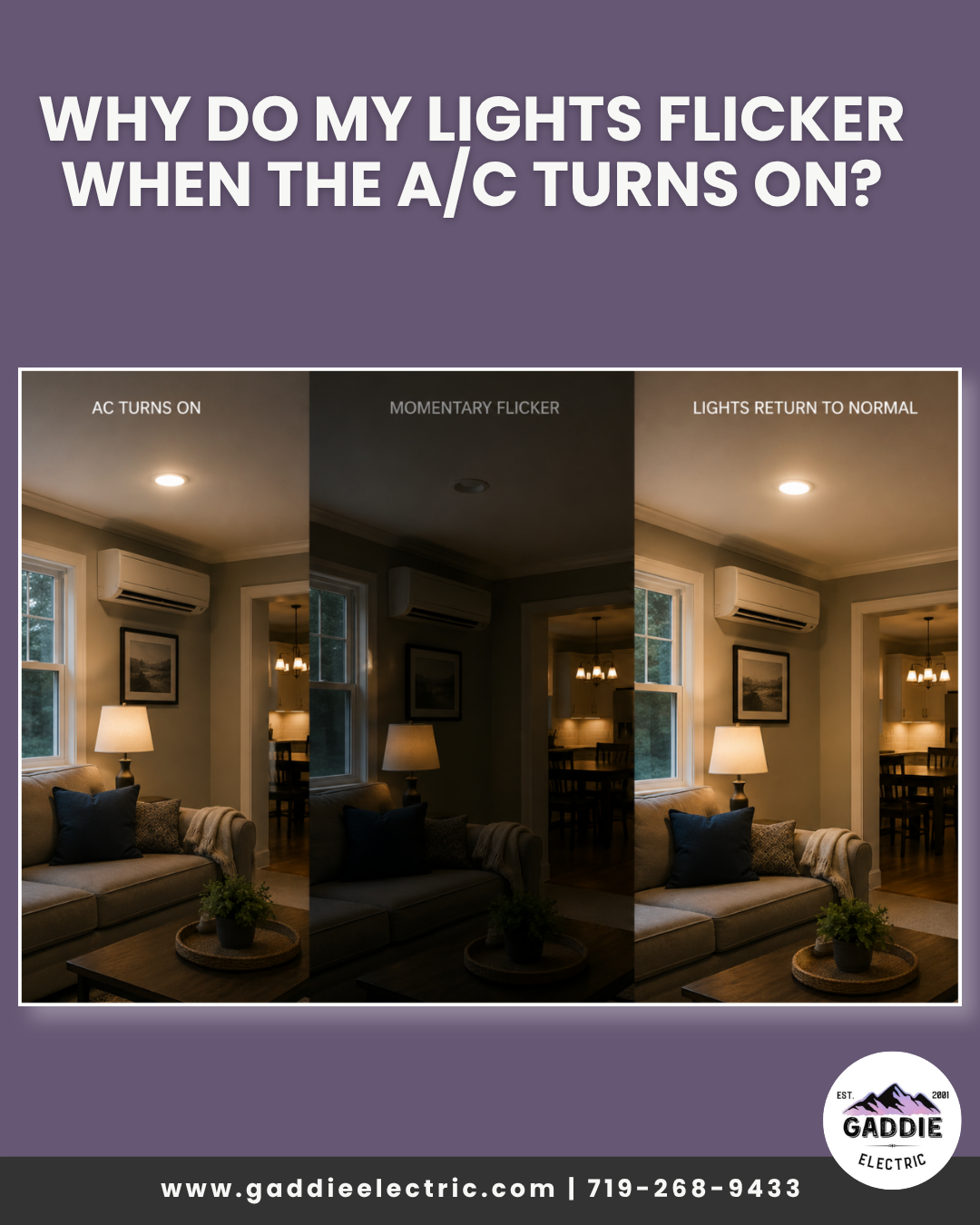
Why Do My Lights Flicker When the AC Turns On?
It’s one of those things homeowners tend to notice immediately.
The air conditioner kicks on during a hot Colorado afternoon, and suddenly the lights dim for a second before returning to normal. Maybe it only happens occasionally. Maybe it seems to happen every time the AC starts running. Either way, it’s usually enough to make people wonder whether something is wrong with the electrical system.
In many homes, especially older homes, a slight flicker when the air conditioner starts may not be unusual. Air conditioning systems require a significant amount of electricity during startup, particularly when the compressor first turns on. That sudden demand can briefly affect the voltage flowing through nearby lighting circuits, causing flickering lights or momentary dimming.
The larger the air conditioning system, the more noticeable that startup demand can become.
Most homeowners don’t realize how hard an air conditioner works electrically. During the hottest parts of summer, the system may cycle on and off repeatedly throughout the day, each time drawing a surge of power as it starts. In homes with aging electrical systems, older wiring, or undersized electrical panels, those startup demands sometimes become more visible through flickering lights.
That doesn’t automatically mean there’s a dangerous problem.
In fact, brief dimming that lasts less than a second can sometimes be considered fairly normal, especially if:
-
- the flickering is minor,
- it only happens when the AC starts,
- breakers are not tripping,
- and there are no burning smells or buzzing sounds.
But there’s also a point where flickering may indicate the electrical system is struggling more than it should.
If the lights dim significantly, flicker repeatedly, or seem to worsen over time, it may be worth taking a closer look at the home’s electrical system. Sometimes the issue is related to the air conditioner itself. As HVAC systems age, compressors can begin drawing more power during startup than they once did. Other times, the issue may involve loose electrical connections, overloaded circuits, or an older electrical panel that was never designed to support modern cooling equipment.
This is particularly common in homes that have been updated gradually over the years. Many older Colorado Springs homes were originally built long before central air conditioning became standard. As cooling systems were added later, the electrical infrastructure sometimes remained largely unchanged.
Over time, that can create situations where the electrical system is operating much closer to its limits during periods of heavy summer demand.
Electricians often look for patterns when diagnosing flickering lights. Does it only happen when the air conditioner starts? Does it affect the entire home or just one room? Are there other symptoms, like warm outlets, buzzing sounds, or tripping breakers? Small details like these can help determine whether the flickering is simply a normal response to startup current or a sign that the system needs attention.
Homeowners dealing with recurring electrical issues sometimes discover that the underlying problem involves an aging electrical panel or overloaded circuits. In some cases, improvements such as electrical panel upgrades or properly installed dedicated circuits can help improve how power is distributed throughout the home.
According to the Electrical Safety Foundation International (ESFI), homeowners should pay attention to warning signs such as repeated breaker trips, buzzing sounds, or unusual electrical behavior, especially in older homes. Organizations like the National Fire Protection Association (NFPA) also recommend having electrical systems evaluated when homeowners notice recurring electrical concerns.
The important thing is understanding that flickering lights are not always an emergency, but they also should not be ignored if they become frequent or severe. Electrical systems tend to give warning signs when they are under stress, and paying attention to those signs early can often help homeowners avoid larger problems later.
Conclusion
If your lights flicker occasionally when the air conditioner starts, the issue may be relatively minor. But if the flickering becomes more noticeable, more frequent, or is accompanied by breaker trips, buzzing sounds, or burning odors, it may be time to have the system inspected.
At Gaddie Electric, we help homeowners throughout Colorado Springs troubleshoot flickering lights, evaluate aging electrical systems, and determine whether repairs or upgrades may help improve the safety and reliability of their homes. Whether the issue involves overloaded circuits, loose connections, or an outdated electrical panel, identifying the cause early can help prevent larger electrical problems down the road.
You can also learn more about our residential electrical services and common electrical troubleshooting services on our website.
Frequently Asked Questions
Is it normal for lights to flicker when the AC starts?
A slight, brief dimming effect can sometimes be normal because air conditioners draw a large amount of electricity during startup.
Can an air conditioner overload an electrical system?
In some homes, especially older homes, air conditioners can place significant demand on the electrical system, particularly during peak summer usage.
Should I worry about flickering lights?
Occasional minor flickering may not always indicate danger, but repeated flickering, buzzing sounds, burning smells, or breaker trips should be evaluated.
Can an old electrical panel cause lights to flicker?
Yes. Older or undersized electrical panels may struggle to handle modern HVAC and electrical demands.