
Most homeowners rarely think about their electrical panel until something stops working.
The lights go out in part of the house. A breaker suddenly trips. An electrician opens the panel during a remodel and quietly says, “This system is pretty old.” Until then, the electrical panel usually sits unnoticed in a basement, garage, or utility room, hidden behind a gray metal door covered in faded breaker labels.
Yet few parts of a home have changed more dramatically over the last century.
The electrical panel has evolved alongside American life itself. As homes added refrigerators, televisions, air conditioning, microwaves, computers, EV chargers, and smart technology, electrical systems were forced to evolve with them. What once powered a few lights and small appliances now supports entire homes filled with electronics, entertainment systems, and high-demand equipment running simultaneously.
Understanding the history of the electrical panel also helps explain why many older homes begin struggling with modern electrical demands long before homeowners realize there’s a problem.
When Homes Relied on Fuse Boxes
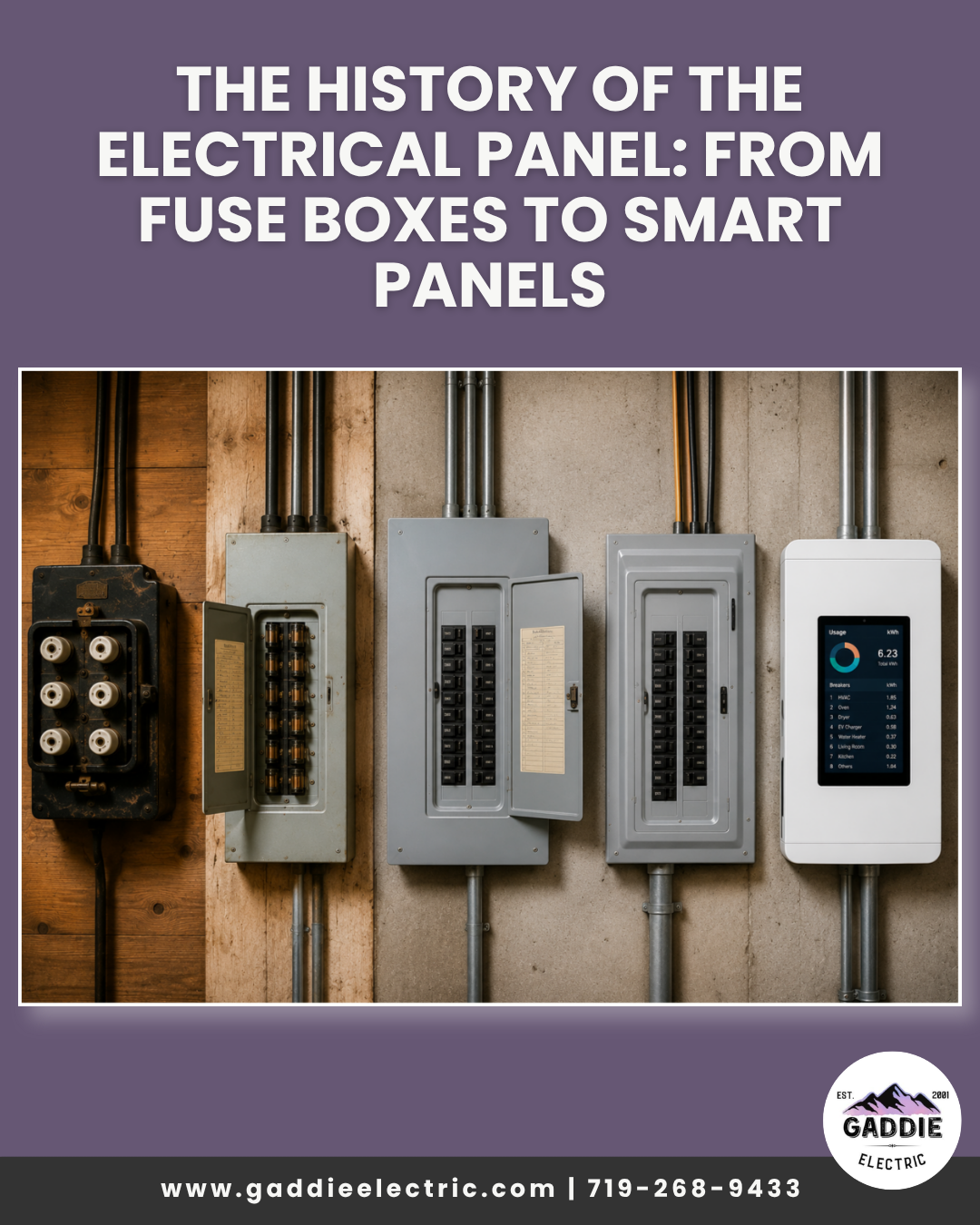
Before modern breaker panels became standard, homes relied on fuse boxes for electrical protection.
Early electrical systems were relatively simple by today’s standards. A home built in the 1920s or 1930s might have only supported a handful of lights, a few outlets, and several small appliances. Electrical demand was low, and fuse boxes were considered an effective way to prevent wiring from overheating.
Instead of resettable breakers, fuse boxes used screw-in fuses containing thin metal strips designed to melt if too much electricity passed through the circuit. Once a fuse blew, the homeowner had to physically replace it to restore power.
For years, the system worked reasonably well. But as families added larger appliances over time, many fuse boxes began operating closer to their limits. Refrigerators, window air conditioners, televisions, and laundry equipment slowly increased the electrical demands placed on homes that had never been designed for that level of usage.
Some homeowners eventually began replacing blown fuses with oversized fuses in an attempt to stop nuisance outages, unintentionally defeating much of the safety protection the system was designed to provide.
Today, fuse boxes can still be found in some older homes throughout Colorado Springs and older neighborhoods across the country. While not every fuse box automatically needs replacement, many older systems were never intended to support the amount of electricity modern homes now require.
The Shift to Breaker Panels
By the middle of the twentieth century, breaker panels gradually began replacing fuse boxes in many homes.
Circuit breakers offered several advantages. Instead of replacing a blown fuse every time a problem occurred, homeowners could simply reset a breaker after the issue was corrected. Breaker panels also made it easier to organize circuits, expand electrical systems, and add new appliances as homes evolved.
As suburban growth accelerated during the 1950s, 60s, and 70s, electrical demand continued rising. Central air conditioning became more common. Kitchens added more appliances. Families used more lighting, more outlets, and more electronics than ever before.
Electrical systems had to grow with the times.
Many homes built during this era still operate using their original breaker panels today. In some cases, those systems continue functioning adequately. In others, homeowners eventually begin noticing signs that the electrical system may be struggling to keep up with modern usage.
Flickering lights, overloaded circuits, limited breaker space, or repeated breaker trips are often some of the earliest warning signs. Homeowners experiencing these issues sometimes begin exploring electrical panel upgrades as a way to improve both safety and electrical capacity.
When Certain Panels Developed a Reputation
Not every electrical panel earned a positive reputation over time.
Certain older panel brands, particularly Federal Pacific Electric (FPE) and Zinsco, eventually became associated with reliability and safety concerns. These panels are still found in some homes today, especially in properties built during the mid-century housing boom.
The primary concern involved breakers that reportedly failed to trip properly under overload or short-circuit conditions. In simple terms, the very safety mechanism designed to shut power off during dangerous situations did not always function as intended.
Because of this, many homeowners choose to replace these panels proactively during remodels, home sales, or larger electrical upgrades.
Organizations like the Electrical Safety Foundation International (ESFI) continue educating homeowners about the importance of recognizing outdated electrical equipment and warning signs within aging electrical systems.
Why Modern Homes Need More Power Than Ever
One of the biggest reasons electrical panels continue evolving is simple: modern homes consume far more electricity than homes did decades ago.
A family in 1965 probably wasn’t charging multiple phones, operating gaming systems, running home offices, streaming entertainment in every room, or charging an electric vehicle overnight.
Today, all of those things are increasingly common.
Even homes that once operated perfectly well may begin reaching the limits of their original electrical systems as additional appliances and technology are added over time. Air conditioning systems, EV chargers, basement finishes, hot tubs, and large kitchen remodels can dramatically increase the amount of electricity flowing through a home every day.
This is one reason electricians increasingly recommend evaluating older electrical systems before major upgrades or additions are installed. In many cases, the electrical panel becomes the foundation that determines whether the rest of the home can safely support modern electrical demand.
Homeowners adding larger appliances or modern upgrades sometimes also require dedicated circuits to safely distribute electrical loads throughout the home.
The Rise of Smart Panels
Today, electrical technology is entering another period of change with the introduction of smart electrical panels.
Unlike traditional breaker panels, smart panels can provide homeowners with real-time information about how electricity is being used throughout the home. Some systems allow homeowners to monitor individual circuits, prioritize backup power during outages, or manage electrical usage remotely through smartphone apps.
These systems are becoming increasingly popular in homes with:
- Solar systems
- Battery backup systems
- EV chargers
- Energy monitoring goals
- Smart home integration
In many ways, smart panels represent the next step in the evolution of residential electrical systems. Instead of simply distributing power, the panel itself is beginning to function more like an energy management system for the entire home.
The National Fire Protection Association (NFPA) and other industry organizations continue adapting safety standards as residential electrical technology becomes more advanced and interconnected.
Electrical Panels Have Always Reflected the Way We Live
Looking back, the history of the electrical panel tells a much larger story than most homeowners realize.
As American homes changed, electrical systems changed with them. Every generation added new appliances, new technology, and new expectations for comfort and convenience. Electrical panels quietly evolved in the background, adapting to support lifestyles that would have seemed unimaginable just decades earlier.
That’s why many homeowners eventually discover that the electrical panel is far more than a gray metal box hidden in the garage. It’s the control center for the entire home, responsible for safely distributing electricity everywhere modern life depends on it.
Conclusion
Most homeowners never think much about their electrical panel until the system begins showing signs of age or limitation. But understanding how these systems evolved helps explain why many older homes eventually require upgrades as electrical demand continues growing.
Whether a home still has an older fuse box, an aging breaker panel, or simply needs additional capacity for modern appliances and technology, keeping the electrical system updated plays an important role in both safety and reliability.
At Gaddie Electric, we help homeowners throughout Colorado Springs evaluate aging electrical systems, troubleshoot electrical concerns, and determine whether upgrades may help support the demands of modern living. You can also learn more about our residential electrical services and electrical troubleshooting services on our website.
Frequently Asked Questions
What is the difference between a fuse box and a breaker panel?
Fuse boxes use replaceable fuses that melt during overloads, while breaker panels use resettable breakers that automatically shut power off when problems occur.
Are old fuse boxes unsafe?
Not always, but many older fuse boxes were never designed for modern electrical demand and may require evaluation by an electrician.
Why are Federal Pacific and Zinsco panels controversial?
These older panel brands became associated with reported breaker reliability concerns and are often replaced proactively during electrical upgrades.
How do I know if my electrical panel is outdated?
Signs may include flickering lights, limited breaker space, repeated breaker trips, or an older panel manufacturer no longer commonly installed today.
What is a smart electrical panel?
Smart panels allow homeowners to monitor and manage electrical usage throughout the home using advanced energy management technology.