
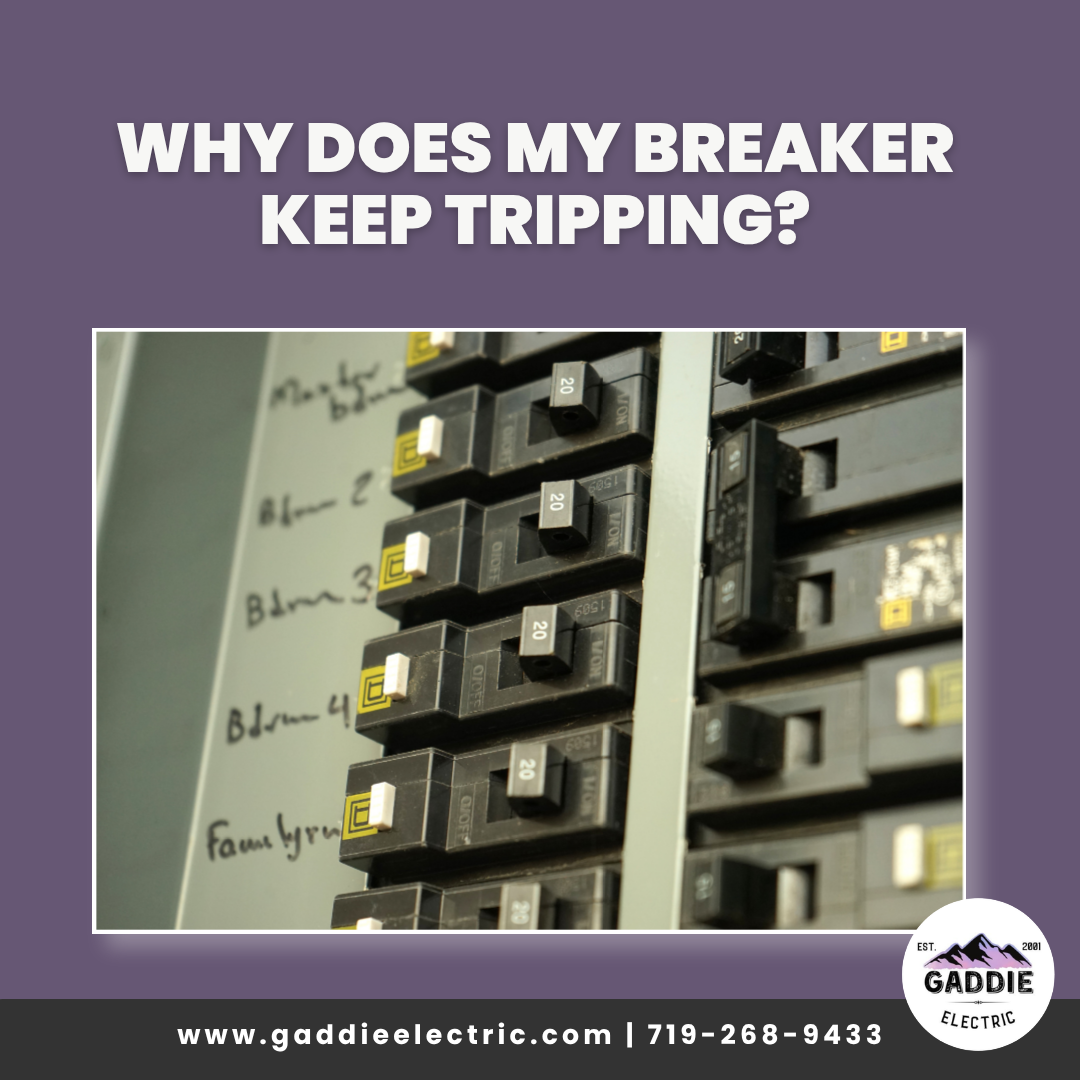
Why Does My Breaker Keep Tripping?
Common Causes, Warning Signs, and When to Call an Electrician
If you have ever gone to reset a breaker only to have it trip again a few minutes later, you are not alone. One of the most common service calls we receive at Gaddie Electric is from homeowners asking:
“Why does my breaker keep tripping?”
Sometimes the fix is simple. Other times, a constantly tripping breaker can point to a larger electrical issue that should not be ignored.
In this article, we will explain:
- What a breaker actually does
- The most common reasons breakers trip
- When it may be a safety issue
- What you can troubleshoot yourself
- When it is time to call a licensed electrician
What Does a Circuit Breaker Do?
Your electrical panel is designed to protect your home from overheating wires and potential electrical fires. A breaker trips when it detects that something on the circuit is unsafe.
Think of it like a safety switch.
When too much electrical current flows through a circuit, the breaker shuts power off automatically to help prevent:
- Overheated wiring
- Damaged appliances
- Electrical fires
- Shock hazards
A breaker that trips occasionally may not be unusual. However, a breaker that trips repeatedly is usually trying to tell you something.
The Most Common Reasons a Breaker Keeps Tripping
1. Too Many Things Are Running on One Circuit
This is one of the most common causes of breaker trips, especially in older homes around Colorado Springs and surrounding areas.
Many older homes were not designed for today’s electrical demands. Between:
- Air fryers
- Space heaters
- Gaming systems
- Microwaves
- Portable AC units
- Home office equipment
…it is easy to overload a circuit.
For example:
Running a microwave, coffee maker, and toaster oven at the same time in the kitchen may overload the breaker.
Signs of an overloaded circuit:
- Breaker trips only when multiple items are running
- Lights dim when appliances turn on
- The breaker resets and stays on after reducing usage
What may help:
- Unplug unused appliances
- Avoid extension cords for heavy loads
- Spread appliances across different outlets or circuits
If overloads happen regularly, you may need a dedicated circuit or electrical upgrade.
Related reading:
Can Your Electrical Panel Handle an EV Charger?
2. A Faulty Appliance Is Causing the Problem
Sometimes the breaker itself is doing exactly what it is supposed to do.
A damaged appliance can pull too much current or create a short circuit.
Common culprits include:
- Space heaters
- Hair dryers
- Microwaves
- Refrigerators
- Washing machines
- Older HVAC equipment
If the breaker trips every time you plug in or use a certain appliance, that appliance may be the issue.
Quick troubleshooting tip:
Try unplugging everything on the circuit and resetting the breaker.
Then plug items back in one at a time.
If the breaker trips when a specific appliance turns on, stop using it until it can be checked.
3. You May Have a Short Circuit
A short circuit happens when electricity takes an unintended path.
This can create:
- Heat
- Sparking
- Burned wiring
- Serious fire hazards
Signs of a possible short circuit:
- Breaker trips immediately
- Burning smell
- Buzzing sounds
- Scorch marks near outlets
- Melted plugs
- Warm outlets or switches
If you notice any of these warning signs, it is best to stop resetting the breaker and contact a licensed electrician.
The Electrical Safety Foundation International (ESFI) recommends treating repeated breaker trips as a potential electrical safety concern, especially when accompanied by heat or burning odors.
4. Ground Faults or Moisture Problems
Bathrooms, kitchens, garages, unfinished basements, and outdoor outlets are especially vulnerable to moisture-related electrical problems.
Water and electricity are not a good combination.
A breaker may trip if moisture:
- Gets inside an outlet
- Damages exterior wiring
- Affects outdoor equipment
- Causes a ground fault
This is especially common after:
- Heavy Colorado thunderstorms
- Snow melt
- Irrigation leaks
- Outdoor exposure
If your breaker trips during storms or wet weather, the issue may involve exterior wiring or outdoor equipment.
5. The Breaker Itself May Be Bad
Breakers do wear out over time.
A failing breaker may:
- Trip randomly
- Feel loose
- Refuse to reset
- Trip even under normal electrical use
While breakers are designed to last many years, age, heat, and repeated stress can eventually cause failure.
This is especially common in older electrical panels.
Some outdated panel brands can also create reliability and safety concerns.
Why You Should Not Ignore a Tripping Breaker
Many homeowners get used to resetting a breaker repeatedly.
Unfortunately, this can become dangerous if the underlying issue is:
- Damaged wiring
- Overheating
- Loose electrical connections
- A failing breaker
- An overloaded circuit
Your electrical system is designed to warn you before bigger problems happen.
A breaker that keeps tripping is often an early warning sign that something needs attention.
Can I Just Replace the Breaker Myself?
We generally do not recommend homeowners replace breakers themselves unless they are experienced and qualified to work inside electrical panels.
Even when the main breaker is shut off, portions of the panel may still remain energized.
More importantly, replacing the breaker without diagnosing the cause may only temporarily hide the real issue.
If the breaker is tripping because of:
- damaged wiring,
- an overloaded circuit,
- or a short,
…the problem will still exist after replacement.
When Should You Call an Electrician?
You should contact a licensed electrician if:
- The breaker trips repeatedly
- It trips immediately after resetting
- You smell burning
- Outlets feel hot
- Lights flicker frequently
- You hear buzzing or crackling
- The panel feels warm
- You are using multiple extension cords regularly
- Your home has an older electrical system
At Gaddie Electric, we help homeowners throughout Colorado Springs and El Paso County identify the real cause of recurring breaker trips without scare tactics or unnecessary upselling.
Sometimes the solution is simple. Sometimes it may involve:
- Dedicated circuits
- Wiring repairs
- Panel repairs
- Electrical upgrades
- Surge protection
- Replacing outdated equipment
The important thing is finding the actual cause safely.
Frequently Asked Questions
Is it normal for a breaker to trip occasionally?
It can happen occasionally if a circuit becomes overloaded. However, repeated trips should be investigated.
Why does my breaker trip when I use the microwave?
Microwaves draw a large amount of power. If other appliances are running on the same circuit, it can overload the breaker.
Can a bad outlet cause a breaker to trip?
Yes. Loose wiring, damaged outlets, or internal failures can create shorts or overheating that cause the breaker to trip.
Is a tripping breaker a fire hazard?
It can be. Breakers are designed to help prevent electrical fires, so repeated tripping may indicate unsafe electrical conditions.
Why does my breaker trip during storms?
Lightning, power surges, moisture intrusion, and utility fluctuations can all affect your electrical system during Colorado storms.
Can an old electrical panel cause breaker problems?
Yes. Older panels and aging breakers can become unreliable over time.
Some outdated panel brands may also have known safety concerns.
Should I keep resetting the breaker?
If it trips once, resetting may be fine. If it continues tripping repeatedly, it is best to stop resetting it and have the issue diagnosed.
Need Help Troubleshooting a Tripping Breaker?
If your breaker keeps tripping and you are not sure why, Gaddie Electric can help.
We provide residential electrical troubleshooting and repair services throughout:
- Colorado Springs
- Black Forest
- Monument
- Peyton
- and surrounding areas.
Our goal is simple:
Help homeowners understand what is happening, fix problems safely, and provide honest recommendations without pressure.
📞 Call today to schedule service.