
Most homeowners have owned a surge protector at some point. Whether it’s the power strip behind the television or the one protecting a desktop computer, we’ve all heard the advice to plug expensive electronics into surge protection.
But what many people don’t realize is that those power strips are only protecting the devices plugged directly into them.
What about the refrigerator with a computer inside it? The furnace control board? The garage door opener? The microwave, dishwasher, washing machine, internet router, smart thermostat, security system, or the dozens of other electronic devices quietly working throughout your home?
That’s where a whole-home surge protector comes in.
Over the past two decades, our homes have become filled with sensitive electronics. Many of the appliances we once thought of as purely mechanical now contain sophisticated circuit boards and processors. As technology has become more integrated into everyday life, protecting those systems has become just as important as protecting the television in your living room.
So what exactly does a whole-home surge protector do, and is it something every homeowner should consider?
First, What Is a Power Surge?
When most people hear the words power surge, they picture a bolt of lightning striking a house.
While lightning certainly can create damaging surges, it’s actually not the source of most electrical surges homeowners experience.
Small voltage spikes occur much more often than people realize. Utility companies regularly switch equipment on and off throughout the electrical grid. Power outages and power restoration can create surges. Large motors, such as air conditioners, refrigerators, and well pumps, cycle on and off every day. Even though these events may last only a fraction of a second, they can send excess voltage through your home’s electrical system.
Most of the time, you won’t notice anything happened.
Your lights don’t flicker.
Your microwave doesn’t stop working.
Nothing appears unusual.
But over time, those repeated surges can slowly wear down the sensitive electronic components inside modern appliances and devices. Rather than causing one dramatic failure, they may gradually shorten the lifespan of expensive equipment.
How Does a Whole-Home Surge Protector Work?
Think of your home’s electrical system like a network of roads leading to every room in the house.
Electricity normally travels smoothly through those roads, delivering the amount of power your appliances and electronics expect to receive.
A surge is like an unexpected wave of extra traffic entering the system all at once. While it may only last an instant, that extra energy still has to go somewhere.
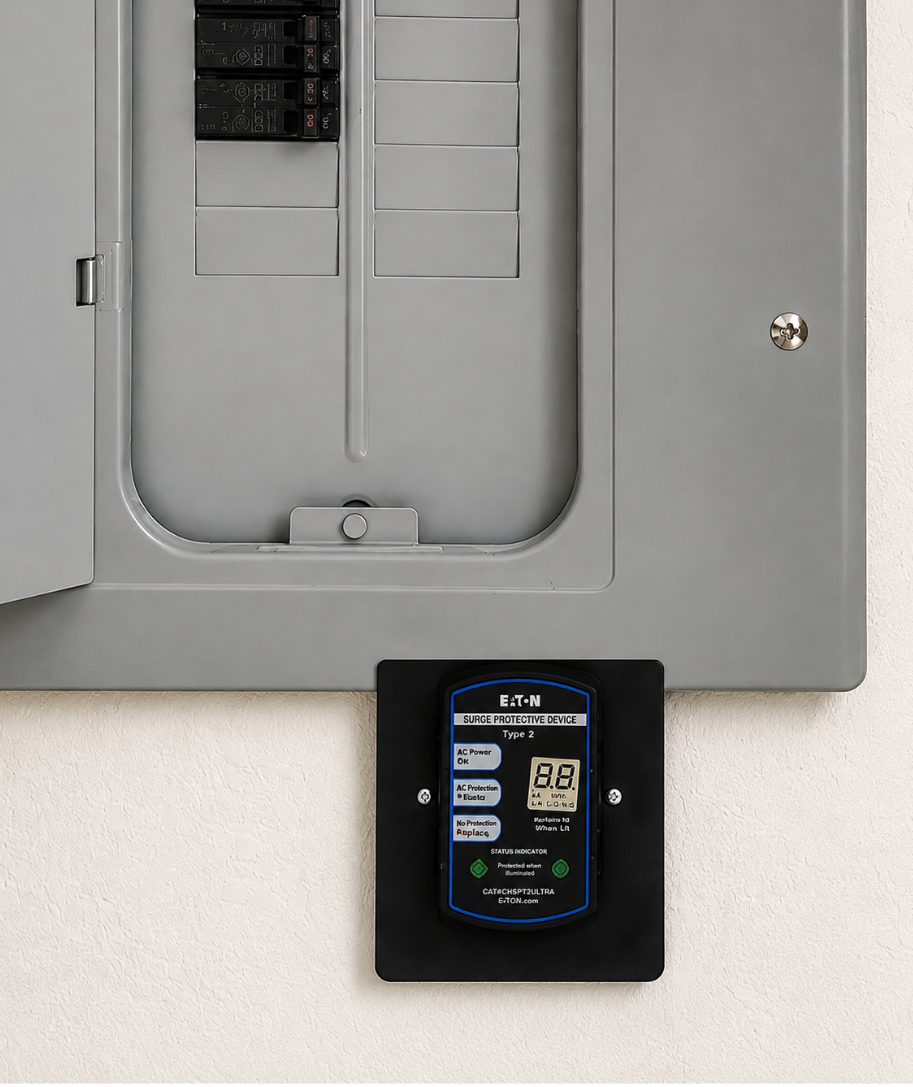
A whole-home surge protector is installed at your electrical panel, where electricity first enters your home’s electrical distribution system. Its job is to recognize excess voltage and safely divert much of that energy away from your home’s wiring before it can travel throughout the electrical system.
It doesn’t stop electricity from flowing, nor does it eliminate every surge. Instead, it helps reduce potentially damaging voltage spikes before they reach the circuits supplying your home’s electronics.
What Does It Actually Protect?
One of the biggest misconceptions about surge protection is that it’s only for computers and televisions.
Today’s homes contain electronics almost everywhere.
Your refrigerator likely has a control board. Your furnace and air conditioner rely on electronic controls. Your dishwasher, washing machine, garage door opener, microwave, smart thermostat, internet router, security system, and even many LED lighting systems all contain sensitive electronic components.
Replacing one of those control boards can often cost hundreds of dollars. Replacing several after a significant electrical event becomes even more expensive.
A whole-home surge protector helps provide another layer of protection for all of those connected systems—not just the devices plugged into a surge strip.
Is It the Same as a Surge Strip?
No.
The surge strip under your desk and a whole-home surge protector work together, but they serve different purposes. A whole-home surge protector is your home’s first line of defense. Installed at the electrical panel, it helps reduce large surges before they travel through your home’s wiring. Point-of-use surge protectors—the strips you plug into wall outlets—provide an additional layer of protection for particularly sensitive electronics like computers, televisions, gaming systems, or home office equipment.
Think of it as wearing both a raincoat and carrying an umbrella. Each serves a purpose, and together they offer better protection than either one alone.
Why Are Electricians Talking More About Surge Protection?
If you’ve had friends or neighbors replace their electrical panel recently, you may have noticed surge protection appearing on their estimates. That’s because electrical codes continue to evolve as our homes change.
Years ago, the average home contained relatively few electronic devices. Today, nearly every major appliance contains circuit boards and electronic controls. As a result, whole-home surge protection has become an increasingly important part of protecting modern electrical systems.
In fact, current electrical codes now require surge protection for most new or replacement dwelling unit electrical services. That means if you’re replacing your electrical panel, you’ll likely see a whole-home surge protector included as part of the installation. It’s not simply an upgrade electricians recommend—it’s now a standard part of many residential panel replacements.
Is a Whole-Home Surge Protector Worth It?
Like many home improvements, the answer depends on what you’re trying to protect.
For homeowners with modern appliances, smart home technology, home offices, security systems, or expensive electronics, many feel the relatively modest investment in whole-home surge protection is worthwhile when compared to the potential cost of replacing electronic control boards or other sensitive equipment.
It’s important to understand that no surge protector can guarantee complete protection against every electrical event, particularly an extremely large lightning strike. However, quality surge protection is designed to reduce the everyday voltage spikes that occur far more frequently and help protect the electrical devices we rely on every day.
Choosing the Right Surge Protector
Not all whole-home surge protectors are the same. Different models offer different surge capacities, warranty terms, monitoring features, and installation requirements. Selecting the right device depends on your home’s electrical system, your electrical panel, and the manufacturer’s recommendations.
That’s one reason surge protectors should always be installed by a qualified electrician. Proper installation is essential to ensure the device performs as intended and complies with current electrical code requirements.
Conclusion
Most homeowners never know when a power surge occurs. The lights don’t necessarily flicker, the television doesn’t shut off, and life goes on as usual. Yet those small electrical events happen more often than many people realize, and over time they can affect the electronics that power nearly every modern home.
A whole-home surge protector isn’t about eliminating every possible electrical problem. It’s about adding another layer of protection for the appliances, equipment, and technology your family depends on every day.
If you’re planning an electrical panel upgrade, surge protection will likely be part of your new installation. If you’re simply interested in learning whether whole-home surge protection makes sense for your existing electrical system, the electricians at Gaddie Electric are happy to answer your questions and help you understand your options. You can also learn more about our Whole Home Surge Protector Installation.
For additional information about electrical safety in the home, the Electrical Safety Foundation International provides excellent homeowner resources on protecting electronics and electrical systems.
Frequently Asked Questions
Does a whole-home surge protector protect everything in my house?
It helps protect the electrical system and the devices connected to it by reducing voltage spikes before they travel throughout your home’s wiring. For especially sensitive electronics, many electricians also recommend using quality point-of-use surge protectors.
Can a whole-home surge protector stop lightning damage?
No surge protector can guarantee complete protection from a direct lightning strike. However, whole-home surge protectors are designed to reduce many of the voltage surges that commonly occur from utility activity, power restoration, and other electrical events.
How long does a whole-home surge protector last?
The lifespan depends on the number and severity of surges it experiences. Many quality surge protectors include indicator lights that show whether the device is still providing protection.
Do I need a whole-home surge protector if I already use surge strips?
Yes. A whole-home surge protector and point-of-use surge protectors work together. One protects the home’s electrical system at the panel, while the other provides additional protection for individual electronic devices.
Is whole-home surge protection required when replacing an electrical panel?
Current electrical codes require surge protection for most new or replacement dwelling unit electrical services. Your electrician can explain how those requirements apply to your specific project.